If you’re planning to study with an online university in Malta or the UK, or you already have a degree and want to move toward a PhD, research career, or even EB1/EB2 track, your scholar profile is the key.
Today, a certificate alone is not enough. What matters is how you package your experience, education, research, and achievements into a profile that looks competitive in Europe, the UK, and globally.
This guide will show you how to:
- Use online Masters (Malta/UK) to build a strong academic foundation
- Prepare a profile ready for PhD applications
- Start building a research and publication record
- Shape your profile for future EB1/EB2 employment-based immigration strategies with proper mentoring

1. Why a Scholar Profile Matters (Even for Online Degrees)
Online degrees from good universities in Malta and the UK can be very powerful – if you treat them as more than just “pass the exam, get the certificate.” Your scholar profile combines:
- Education – Degrees, universities, grades
- Research – Projects, papers, conference presentations
- Professional Impact – Leadership, innovation, problem-solving
- Global Positioning – How your work fits into UK / EU / international standards
When structured correctly, this profile can:
- Make you more attractive for PhD supervisors
- Support applications for research positions in Europe and the UK
- Give you a stronger base when working with a lawyer on EB1/EB2 strategies
- Help you jump in your career – promotions, consulting roles, or international opportunities
2. Using Online Masters (Malta/UK) to Build a Strong Academic Base
If you are considering or already enrolled in an online Masters, MBA, or MSc from Malta or the UK, you can use it as a platform to build a serious academic identity.
2.1 Choosing the Right Program
Instead of choosing a degree only by title or low fees, think strategically:
- Does this program align with your career and research interests (engineering, business, technology, management, etc.)?
- Does it offer projects, a thesis, or a dissertation that you can convert into research papers?
- Is the university located in or accredited by UK / EU standards that are recognized internationally?
2.2 Turning Assignments into Research Opportunities
Many students complete assignments only to pass. A scholar-focused approach is different:
- Select assignment topics that can later become case studies or research articles.
- Save data, references, and results in a structured way for possible future publication.
- Discuss with your mentor/supervisor about shaping your final project into a publishable paper.
This way, your online degree becomes a research pipeline, not just a study program.
3. Preparing for PhD: Profile, Proposal & Supervisor Outreach
A strong PhD application in Europe or the UK is not only about grades. Supervisors look for clarity, consistency, and potential.
3.1 Building a Clear Research Direction
To impress potential supervisors, you should have:
- A focused research area (e.g., sustainable manufacturing, AI in logistics, strategic leadership, etc.)
- Evidence of reading and understanding current literature in that area
- A sense of what “gap” you want to address in your PhD
3.2 Drafting a Strong Research Proposal
A basic PhD proposal usually includes:
- Title (clear and specific)
- Background – What is known? What is the context (industry / academic)?
- Problem / Gap – What is missing in the current knowledge or practice?
- Objectives – What exactly will you study or improve?
- Methodology – How will you do the research (methods, data, tools)?
- Expected Contribution – Why will this matter in Europe/UK/global context?
A mentor can help you sharpen these points so the proposal looks credible to UK/European academics.
3.3 Academic CV & Supervisor Communication
For PhD applications, you need a European/UK style academic CV:
- Education details with thesis topics (if any)
- Research experience (projects, papers, conference talks)
- Professional experience linked to your research direction
- Skills (methodologies, tools, software, languages)
When emailing supervisors:
- Be short and clear: who you are, what you have done, what you want to study
- Attach your CV and a short proposal or concept note
- Show that you understand the supervisor’s research and how you could fit
4. Research & Publication: The Core of a Strong Profile
For PhD, research careers, and future EB1/EB2 plans, research output is central. Even if you are a working professional, you can slowly build a track record.
4.1 Turning Your Work into Research
If you are in industry (engineering, business, tech, etc.), you probably:
- Solve real problems
- Improve processes
- Lead or contribute to projects
With the right guidance, these can become:
- Case studies (documenting a problem and solution)
- Conference presentations
- Journal articles in practical or applied fields
4.2 Choosing Where to Publish
Not all journals are equal. For a strong scholar profile:
- Avoid predatory journals that publish anything for money
- Prefer indexed journals (Scopus, Web of Science, etc., where possible)
- Start with conferences if journals feel too difficult initially
Consistency is more important than instant perfection. Even a few well-placed publications can change how your profile looks to a PhD supervisor or future employer.
5. From Scholar Profile to EB1/EB2 Potential (With the Right Foundation)
Important: EB1/EB2 (US employment-based immigration categories) are legal processes that must be handled by a qualified immigration attorney. However, before any lawyer can build a case, you need strong content and evidence in your profile.
A well-developed scholar profile can support future EB1/EB2 strategies through:
- Publications in recognized journals and conferences
- Citations and visible impact
- Leadership in projects or research
- Memberships in professional bodies or associations
- Awards, recognitions, and documented achievements
While a mentor cannot replace a lawyer, a mentor can help you:
- Plan which achievements to build over the next 2–5 years
- Structure your academic CV and evidence portfolio
- Shape your work into recognizable, documentable contributions
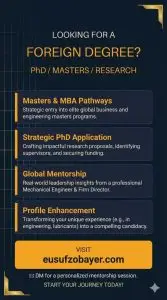
6. How Mentorship Helps You “Jump” in Your Career
Mentorship connects your education, work, and research into one clear direction. Instead of moving randomly, you move strategically toward a higher level.
With an experienced mentor (for example, a Mechanical Engineer, Firm Director, and global mentor), you can:
- Design a step-by-step plan for your online Masters / PhD path
- Turn your projects into research outputs
- Understand European / UK academic expectations
- Gradually build a profile that is attractive to:
- PhD supervisors in Europe / UK
- International employers
- Future immigration strategies (with proper legal advice)
Instead of only collecting certificates, you build a and a reputation.
7. Europe / UK Visualization: Think Beyond Borders
When you imagine your future, don’t just think of a local office. Think in terms of:
- Presenting your work at a conference in London, Berlin, or Malta
- Collaborating with European or UK-based researchers
- Publishing in journals read by a global audience
- Using your online UK/Malta degree as a bridge to real international impact
A strong scholar profile makes these visuals realistic, not just dreams.
8. Work With a Mentor to Shape Your Scholar Profile
If you want structured help to:
- Plan your online Masters / MBA / MSc from Malta or the UK
- Prepare a PhD-ready profile
- Build a consistent research and publication track
- Strengthen the academic side of your profile for long-term global opportunities
you can work with a dedicated mentor who understands:
- Technical fields (e.g., engineering, business, management)
- Industry realities
- European / UK academic standards
Next Step:
- Visit: eusufzobayer.com
- Or send a direct message for a personalized mentorship session
Start now to design the scholar profile that supports your Masters, PhD, and global career jump. Your degree is only the beginning – your profile is what the world will see.